Asr Prayer Time Today: Step-by-Step Afternoon Guide

Islamic Namaz Time in
 Fajr
Fajr Dhuhr
Dhuhr Asr
Asr Maghrib
 Isha
IshaWhat is Asr Prayer? Why is it Called Salat al-Wusta?
Asr is the third of the five daily obligatory prayers for Muslims, usually performed in the afternoon. In Islamic law, Asr holds an extremely special and lofty status.
The Quran specifically emphasizes: "Guard strictly your habit of prayers, especially the Middle Prayer, and stand before Allah in a devout frame of mind." (2:238). The vast majority of Islamic scholars believe that the Middle Prayer mentioned here is exactly Asr.
The afternoon is often the time when people are busiest at work, most engaged in business, or starting to feel exhausted. Stopping work at this moment to overcome worldly temptations and prostrate to Allah requires tremendous faith and perseverance. Furthermore, Prophet Muhammad (ﷺ) taught that the angels responsible for the day and night change shifts at the times of Fajr and Asr. Therefore, guarding the Asr prayer means your good deeds will be recorded by both groups of angels simultaneously and testified before Allah.
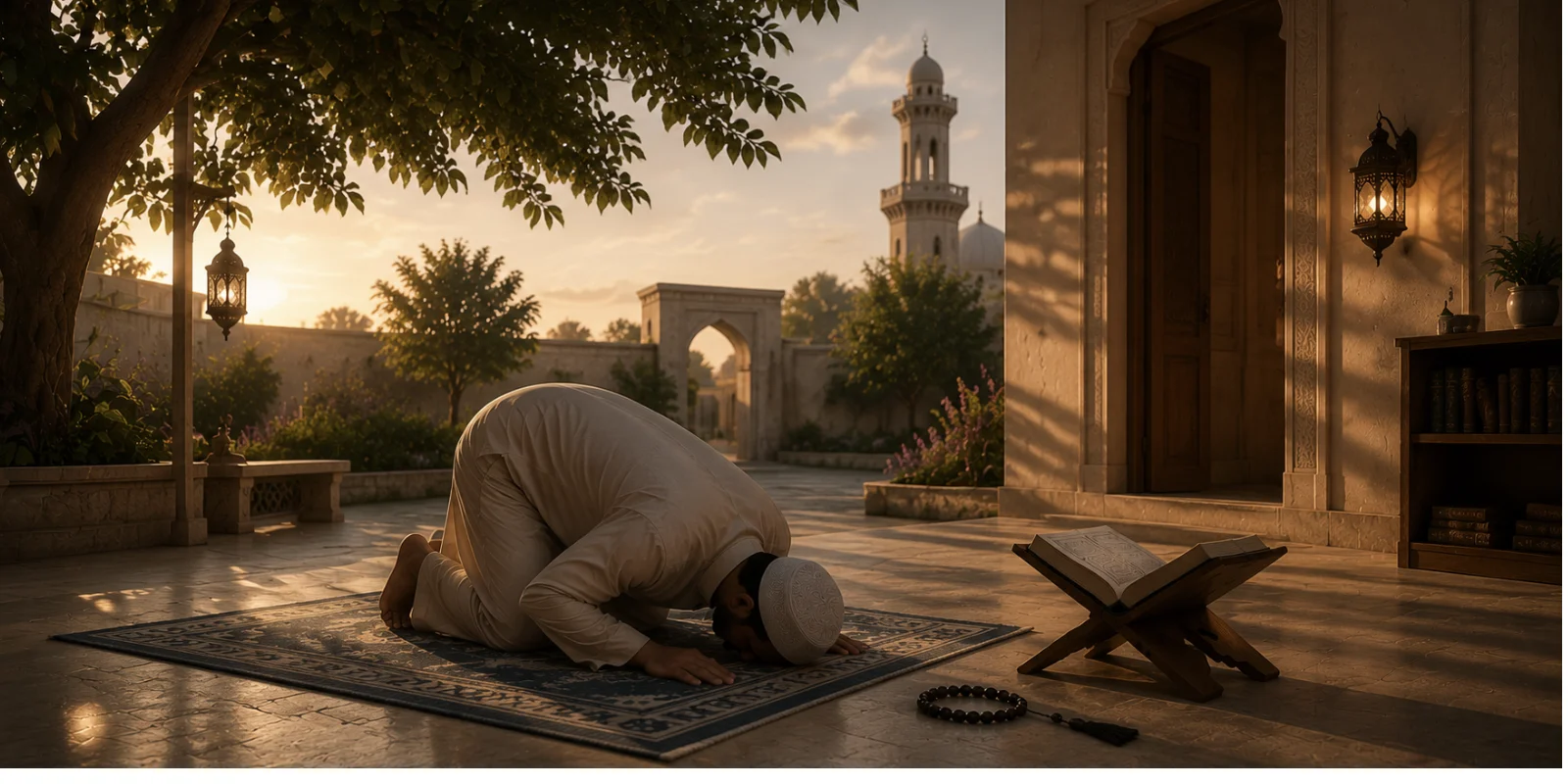
Start and End Times of Prayer Time for Asr and Calculation Differences Between Schools
The time for Asr is not determined by a fixed clock time, but is calculated based on the length of an object's shadow cast by the sun. All schools agree that the end time of Asr is sunset (the beginning of Maghrib), but regarding the start time of Asr, there is the only major calculation disagreement in Islamic jurisprudence:
Majority Standard (covering Shafi'i, Maliki, and Hanbali schools): When the length of an object's shadow equals the height of the object itself (plus the baseline shadow length at noon), the Asr time begins. This time is relatively earlier.
Hanafi School Standard: When the length of an object's shadow equals twice the height of the object itself (plus the baseline shadow length at noon), the Asr time truly begins. Therefore, the Hanafi school's Asr start time is usually about 45 minutes to an hour later than other schools.
The Red Zone of Asr: Makruh Times to Strictly Avoid
Although the legal time window for Asr lasts until sunset, Islamic law strongly discourages delaying the prayer to the last moment.
In the last 15 to 20 minutes before sunset, when the sun's rays weaken, its color turns yellow or red, and you can look directly at it with your naked eyes, this period is known as Makruh. Unless there is an extremely special and irresistible reason (such as sudden illness or just getting off work), praying Asr during this period is considered negligence of faith. Believers should try their best to complete this sacred prayer before the sun turns yellow.
Core Advantages of QuranTime: Why Choose Us?
Pinpoint Local Prayer Times
Based on your device's real-time GPS coordinates, it uses highly accurate astronomical algorithms to ensure the exact start and end times of every prayer down to the second.
Punctual Adhan Playback and Reminders
Offers smart multidimensional reminders and supports Adhan audio playback, ensuring you never miss a conversation with Allah.
Support for Downloading and Printing Monthly Prayer Timetables
Generate and export a customized monthly prayer timetable for your city with one click, easy to print for your home or save to your phone's gallery.
Flexible Adaptation to Different Sects and Schools
Whether you follow ISNA, MWL, or the Karachi standard, and whether you belong to the Hanafi or Shafi'i school, you can switch the time algorithm with one click in the background.
Simple and Easy-to-Use Qibla Compass
Even when traveling or in unfamiliar surroundings, just open the app, and the fast compass will accurately lock onto the direction of the Kaaba for you.
Built-in Adhkar and Digital Tasbeeh
No physical prayer beads on hand after praying? Seamlessly switch to the app's post-prayer Adhkar and digital counter to complete your remembrance of Allah anywhere, anytime.
Ad-Free Interruption, Focus on Your Faith Journey
An extremely pure interface with a promise never to place commercial ads, preserving a clean and immersive spiritual space for you.
Number of Asr Prayer Rakat and Structure
The core legal obligation of Asr is 4 Fard Rak'ahs.
Asr has a very important rule that is easily overlooked by beginners: it is a silent prayer (Sirri). Unlike the loud recitation of Fajr, in any Rak'ah of Asr, all Quranic verses (including Surah Al-Fatihah) must be recited silently in the heart or mouthed wordlessly, and absolutely no sound should be made.
Step-by-Step Prayer Movement Guide
Below is the standard process for the 4 Fard Rak'ahs of Asr:
Intention and Takbeer: Clearly state in your heart "I intend to complete the 4 Fard Rak'ahs of Asr", raise both hands to your earlobes, and say "Allahu Akbar".
First Rak'ah
Stand, silently recite Surah Al-Fatihah and another Quranic verse. Ruku, reciting praises; stand up straight again. Complete two Sujoods.
Second Rak'ah
Stand up, silently recite Surah Al-Fatihah and another Quranic verse. Ruku and complete two Sujoods. First Tashahhud: Maintain a kneeling sitting posture, silently recite the testimony of faith, and then stand straight up.
Third Rak'ah
Stand, silently recite only Surah Al-Fatihah (without adding other verses). Ruku and complete two Sujoods.
Fourth Rak'ah
Stand up, similarly silently recite only Surah Al-Fatihah. Ruku and complete two Sujoods. Final Tashahhud and Tasleem: Remain kneeling, silently recite the testimony of faith, prayers of blessing upon the Prophet, and supplications. Turn your head to the right and left for Tasleem, and the prayer is complete.
Workplace and Campus Prayer Guide
Lock in Dedicated Block Time
On your office calendar, reserve 10-15 minutes of Block Time every afternoon to avoid being scheduled for meetings.
Prepare Wudu in Advance
Try to perform Wudu during the noon Dhuhr prayer and maintain the state, so you can go directly to pray when Asr time arrives in the afternoon, greatly saving time.
Find a Quiet Space
If the company or school does not have a dedicated prayer room, you can look for an empty conference room, a deserted stairwell, or a quiet storage room.
Keep a Travel Prayer Mat Handy
Keep a lightweight Travel Prayer Mat in your desk drawer or backpack to build your sacred space anytime, anywhere.
Post-Prayer Practices: Start Your Evening Adhkar from Asr
In Islamic tradition, before sunrise and before sunset are the most beautiful moments to remember Allah. After completing Asr, you have not only fulfilled an obligation but also opened the spiritual door to welcome the night.
The period from the end time of Asr Prayer until Maghrib is the golden time to recite Evening Adhkar. You can directly open QuranTime's built-in Adhkar library, use the digital Tasbeeh feature, and recite prayers seeking peace, gratitude, and protection, washing away the fatigue and stress from a day's work.
Asr Frequently Asked Questions
Q1: What should I do if I accidentally got too busy and forgot, only realizing it when the sun has set (entering Maghrib time)?

Q2: What should I do if it is extremely inconvenient to pray Asr in the afternoon during a business trip, travel, or when catching a long-haul flight?
Q3: Can I perform additional voluntary prayers (Nafl) after finishing Asr?
Q4: If the sun sets exactly while I am praying Asr, is my prayer still valid?
Q5: Are there Sunnah prayers before Asr like other prayers?